Why Luxor Is Egypt’s Greatest Open-Air Museum
Overview
Luxor is one of the world’s most remarkable archaeological destinations and is often described as Egypt’s greatest open-air museum. Built around the ancient city of Thebes, Luxor is surrounded by magnificent temples, royal tombs, monumental statues, and ancient religious sites that tell the story of Egypt’s powerful pharaohs.
From the spectacular temples on the East Bank to the legendary tombs of the West Bank, Luxor allows travelers to explore thousands of years of history within a relatively compact area. Every monument reveals another chapter of ancient Egyptian civilization, making the city an essential destination for history and archaeology lovers.
Karnak Temple: A Monumental Ancient Complex
The Karnak Temple Complex is one of Luxor’s most impressive attractions and one of the largest ancient religious complexes ever constructed.
Visitors can explore:
- The Great Hypostyle Hall
- Monumental columns covered with hieroglyphs
- Ancient obelisks
- Sacred lakes
- Temple courtyards and sanctuaries
- Beautifully preserved reliefs
Walking through Karnak reveals the extraordinary scale and craftsmanship of ancient Egyptian architecture.
Luxor Temple: History in the Heart of the City
Located along the Nile, Luxor Temple offers a fascinating glimpse into the religious and royal traditions of ancient Thebes.
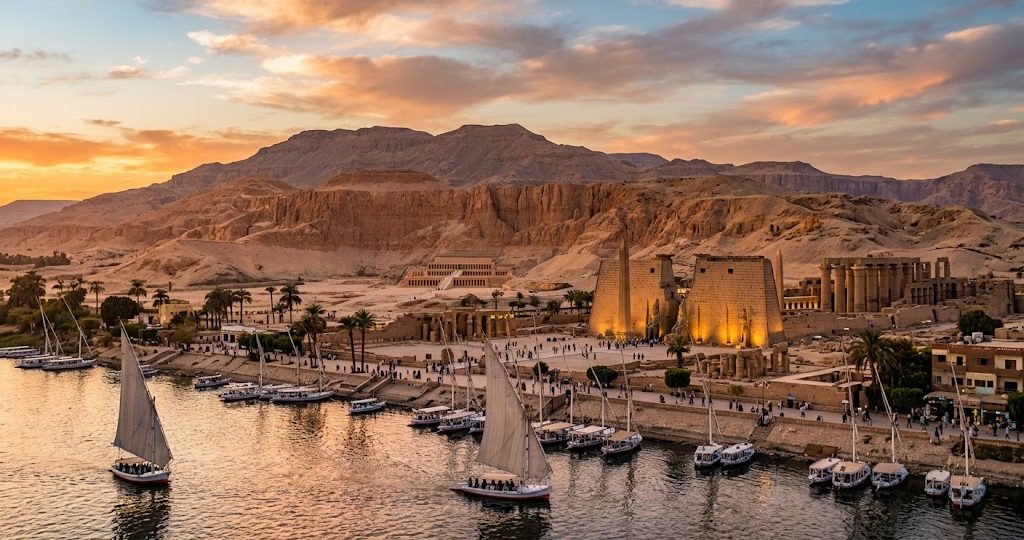
The temple is especially impressive at sunset when its massive columns and statues are beautifully illuminated. Its connection with the ancient Avenue of Sphinxes also demonstrates how important Luxor was as a religious center.
Valley of the Kings: Tombs of the Pharaohs
Across the Nile on the West Bank lies the famous Valley of the Kings, the burial ground of many New Kingdom pharaohs.
Visitors can enter selected royal tombs decorated with:
- Colorful wall paintings
- Hieroglyphic inscriptions
- Religious scenes
- Images of ancient Egyptian gods
- Detailed depictions of the journey into the afterlife
The valley is also associated with the discovery of Tutankhamun’s famous tomb.
Temple of Hatshepsut: A Masterpiece in the Cliffs
The Mortuary Temple of Hatshepsut stands dramatically against the cliffs of Deir el-Bahari.
Built for Queen Hatshepsut, one of ancient Egypt’s most notable female rulers, the temple features impressive terraces, columns, statues, and reliefs depicting important events from her reign.
Its unique architectural design makes it one of the most recognizable monuments on Luxor’s West Bank.
Colossi of Memnon and the West Bank
The massive Colossi of Memnon stand at the entrance to the ancient mortuary complex of Amenhotep III.
The two enormous stone statues have welcomed travelers to Luxor’s West Bank for centuries and remain an essential stop during archaeological tours.
Nearby, visitors can discover additional tombs and temples that reveal how ancient Egyptians honored their kings and prepared them for the afterlife.
Experience Luxor Beyond the Monuments
Luxor is not only about archaeological sites. The city also offers memorable ways to experience its landscapes and culture.
Popular experiences include:
- Sunrise hot air balloon rides over the West Bank
- Traditional felucca sailing on the Nile
- Horse or camel rides
- Exploring local markets
- Visiting villages along the Nile
- Enjoying sunset views from the river
These experiences provide a different perspective of the ancient monuments and the modern life surrounding them.
Why Luxor Deserves Its Famous Title
Luxor earns its reputation as Egypt’s greatest open-air museum because extraordinary archaeological treasures are found throughout the city and its surrounding areas.
A single journey can take travelers from monumental temples and royal tombs to ancient statues, sacred avenues, and beautifully decorated burial chambers—all within the landscape of ancient Thebes.
For anyone fascinated by pharaohs, archaeology, architecture, and ancient history, Luxor is an unforgettable destination.
Final Thoughts
Luxor is where ancient Egyptian history feels truly alive. Its temples, tombs, statues, and sacred monuments create an extraordinary journey through thousands of years of civilization.
From the grandeur of Karnak to the mysterious tombs of the Valley of the Kings, every site has a story to tell. Whether you’re visiting for archaeology, culture, photography, or simply the wonder of standing among ancient monuments, Luxor offers an experience unlike anywhere else in Egypt.


